
Choosing between a conventional loan and an FHA loan is one of the most common decisions Texas home buyers face. Both allow you to purchase a home with a relatively low down payment, but they differ in important ways — from credit requirements to mortgage insurance and long-term costs.
The right choice depends on your credit score, how much you can put down, and how long you plan to stay in the home. This guide compares the two side by side so you can make a confident decision.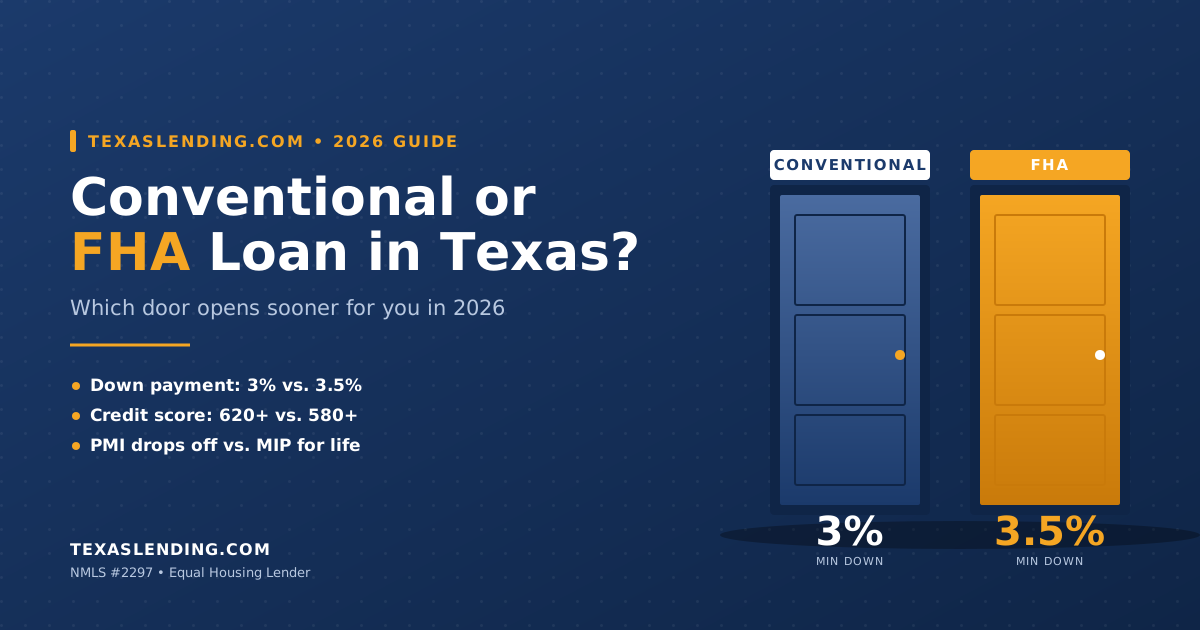
What Is a Conventional Loan?
A conventional loan is a mortgage that is not backed by a government agency. It follows guidelines set by Fannie Mae and Freddie Mac and is offered by private lenders, banks, and credit unions. Conventional loans typically require a minimum credit score of 620 and offer down payments as low as 3 percent for qualifying first-time buyers.
One of the biggest advantages of a conventional loan is that private mortgage insurance can be removed once you reach 20 percent equity in your home. This can save you a meaningful amount each month over the life of the loan.
What Is an FHA Loan?
An FHA loan is insured by the Federal Housing Administration, which allows lenders to offer more flexible qualification standards. FHA loans Dallas TX buyers frequently choose require a minimum credit score of 580 with a 3.5 percent down payment, or a score as low as 500 with 10 percent down.
FHA loans are designed to make homeownership more accessible, especially for first-time buyers and those with less-than-perfect credit. However, they come with mortgage insurance that typically lasts for the life of the loan if you put down less than 10 percent.
Key Differences at a Glance
● Minimum credit score — Conventional: 620. FHA: 580 (or 500 with 10 percent down).
● Minimum down payment — Conventional: 3 to 5 percent. FHA: 3.5 percent.
● Mortgage insurance — Conventional: PMI required below 20 percent down, removable at 20 percent equity. FHA: Upfront premium plus monthly MIP, typically for the life of the loan.
● Loan limits (2026) — Conventional conforming limit is higher in most areas. FHA limits vary by county.
● Property standards — FHA requires the home to meet specific safety and habitability standards. Conventional appraisals are less restrictive.
● DTI flexibility — FHA generally allows higher debt-to-income ratios, up to 50 percent or more with compensating factors.
When Conventional Is Usually the Better Choice
Conventional loans tend to be more cost-effective for borrowers with credit scores above 700 and the ability to put down at least 5 percent. The key advantage is removable mortgage insurance — once your equity reaches 20 percent, PMI drops off and your monthly payment decreases. Over a 10-year period, this difference can save thousands compared to FHA mortgage insurance that never goes away.
If you can afford a 20 percent down payment, conventional is almost always the better option because you avoid mortgage insurance entirely.
When FHA Is Usually the Better Choice
FHA loans shine for buyers with credit scores below 680 or higher debt-to-income ratios. Because FHA charges a flat mortgage insurance rate regardless of credit score, borrowers with lower scores often pay less with FHA than they would with conventional PMI, which gets significantly more expensive as credit scores drop.
FHA is also more forgiving of recent credit events, such as a bankruptcy or foreclosure, and allows gift funds for the entire down payment — making it a strong choice for buyers who need maximum flexibility.
📖 Related: FHA Home Loans in Texas — Your complete guide to FHA loan requirements and benefits in Texas.
A Common Strategy: Start with FHA, Refinance to Conventional
Many buyers start with an FHA loan to get into homeownership quickly, then refinance to a conventional loan once their credit improves and they build 20 percent equity. This eliminates the FHA lifetime mortgage insurance and often secures a lower interest rate. It is a practical path that works well for buyers whose financial picture is improving over time.
A licensed mortgage consultant at Texaslending can model both options side by side and show you the total cost over time, so you can choose the loan that fits your goals.


